

Table of Contents
Perfectionism can be a good thing! It can help you accomplish things and become more effective. It can even boost your creativity! However, it’s important to understand the difference between adaptive and maladaptive perfectionism. And one is better than the other.
The Two Types of Perfectionism
As an adaptive perfectionist, you have high performance expectations but allow yourself to make small mistakes for the greater good. You have high standards and are critical of your work to achieve good results. The best part about adaptive perfectionism is that it maximizes creativity in people with moderately high levels of this trait.
Maladaptive perfectionists, on the other hand, are more likely to procrastinate because they try to avoid making mistakes. They are more concerned about making mistakes and achieving high standards. They believe they are not allowed to fail or produce subpar work because they strive for perfect results. As a result, maladaptive perfectionism can negatively impact performance.
Both types can occur in different situations and to different degrees. The goal is to use adaptive perfectionism to your advantage while avoiding maladaptive perfectionism. I’ll show you four steps to transition from maladaptive to adaptive perfectionism.
How to go from a Maladaptive to an Adaptive Perfectionism in 4 steps.
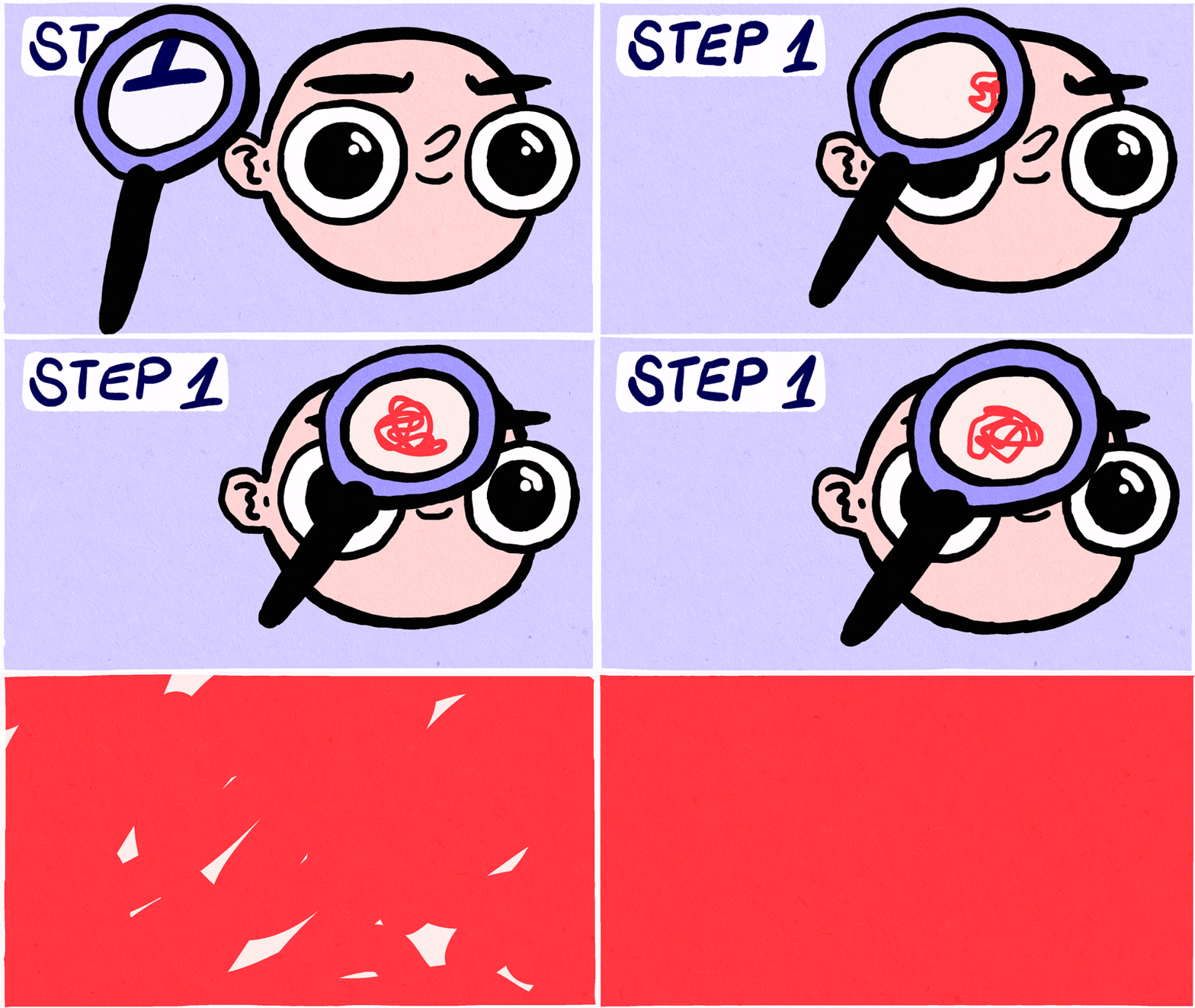
➡ Step 1: Identify your type of perfectionism and the situations in which it occurs
If you struggle with perfectionism, then you likely have the maladaptive type in the areas where you experience negative perfectionism. You likely wouldn’t consider it a problem if it were the adaptive type. Try to find out why. Is there an area of your creative life where you allow yourself to make mistakes? If so, why?
Identify where you struggle the most, as well as areas where you want to be perfect but struggle less. The better you can identify your problems as they arise and how you have dealt with them in the past, the better you can improve.
Once you have done this, the next step is to try to change your maladaptive perfectionism into an adaptive one.
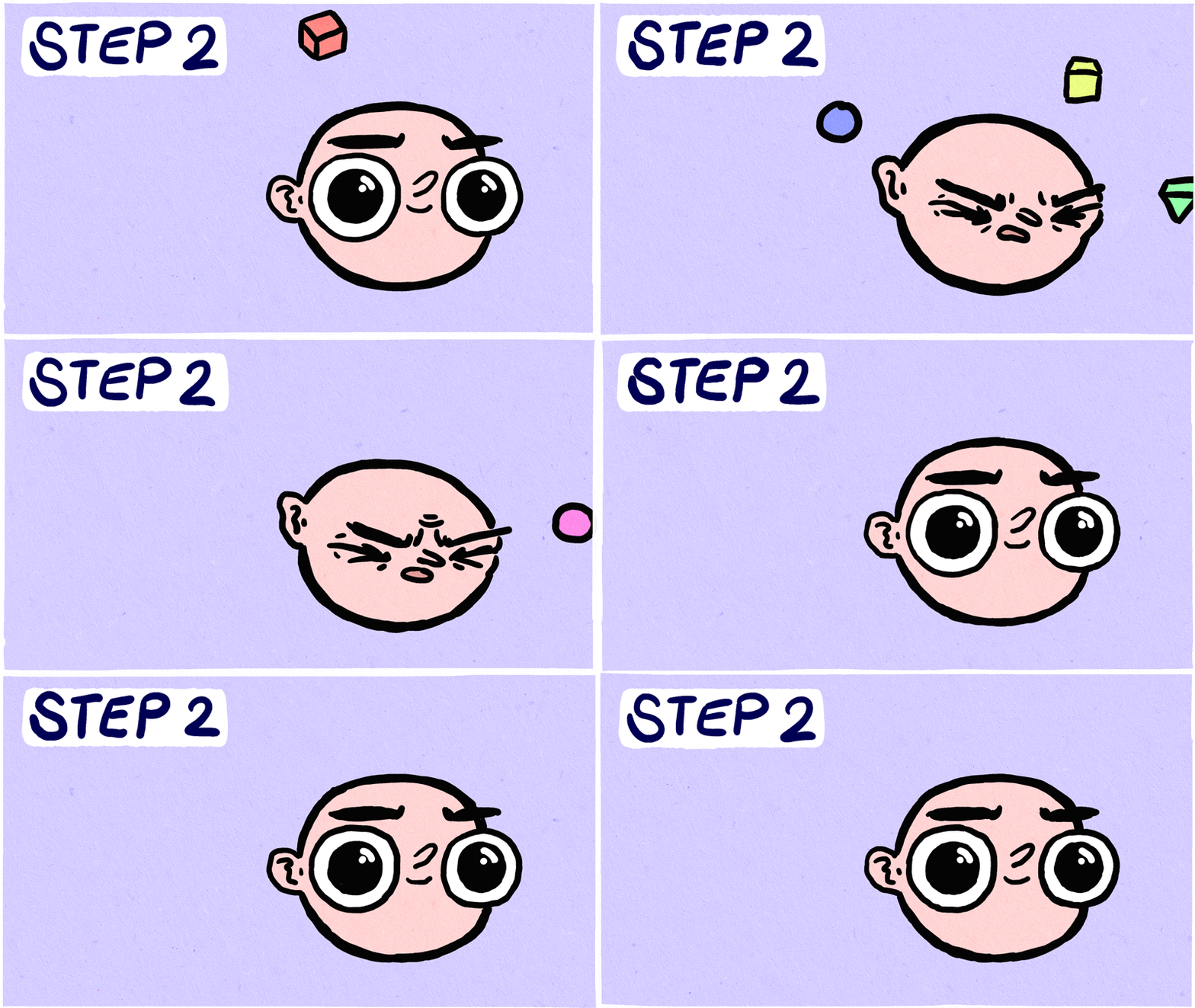
➡ Step 2: Be aware of the challenging process and its obstacles.
It is difficult, if not impossible, to fix perfectionism itself. However, we can change how we react to stressful experiences, which can reduce their negative effects. To do so, we must change our self-criticism. We must allow ourselves to make mistakes.
There will be obstacles and setbacks in the process of change. If you have ever tried to change before, then you know this. A bad day, something not working, not seeing progress, and much more can set you back. Try visualizing the risks that could come your way to free yourself from your perfectionist tendencies. Lie down, close your eyes, and imagine how you could fail. Figure out how you are going to overcome those failures. If you do this, you will be ready when a negative environment tries to stop you in the future!
In order to overcome obstacles and setbacks and improve, we also need to change our mindset and allow ourselves to make mistakes. It’s not easy, and it takes time, but it works. Be aware that a challenging process awaits you.
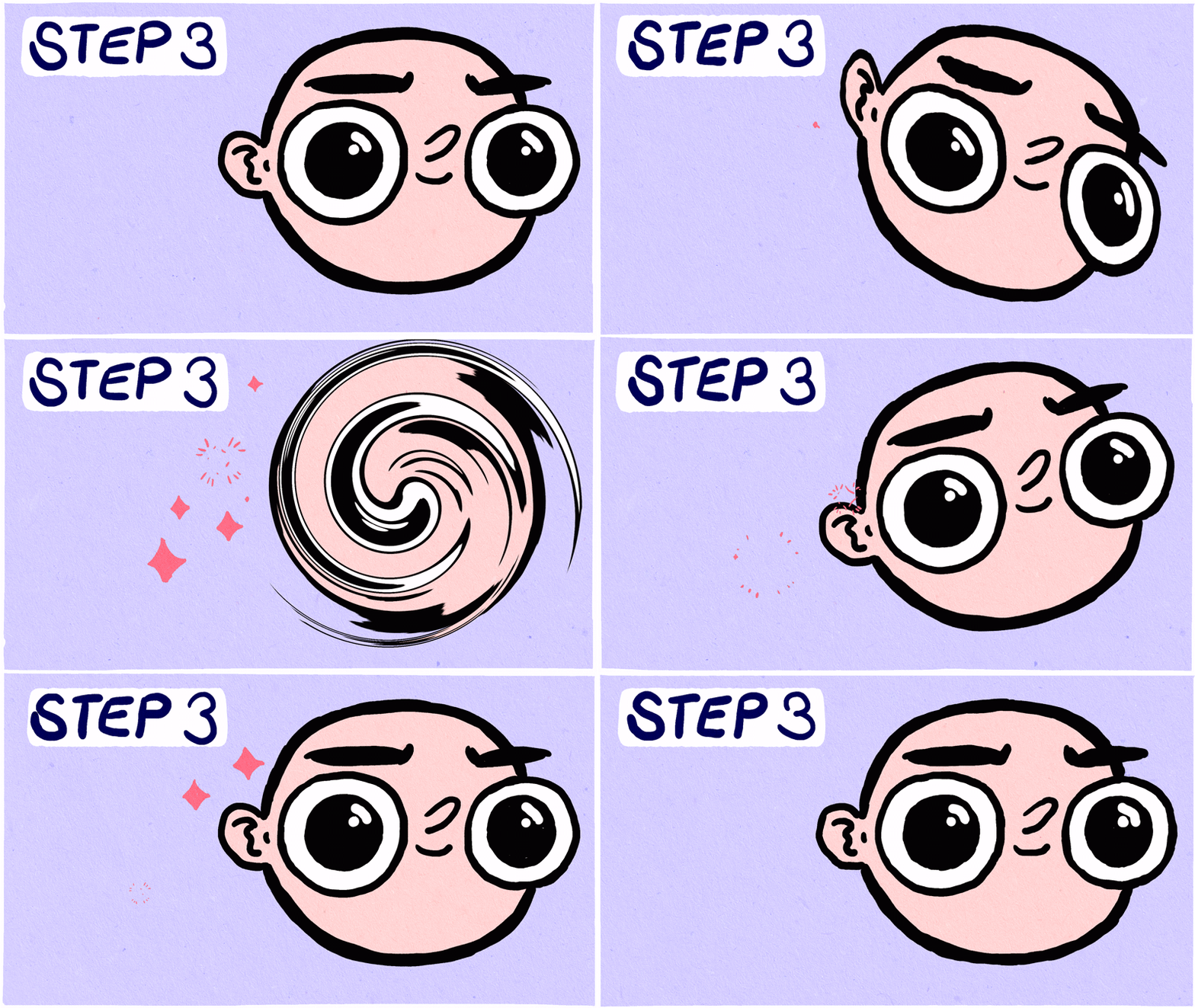
➡ Step 3: Change your mindset.
There are two types of mindsets: fixed and growth. A fixed mindset is the belief that you cannot change. A growth mindset is the belief that skills and qualities can be developed. People with a growth mindset allow themselves to make mistakes to improve.
Adopt a growth mindset. Simply knowing that it exists will help. Then, allow yourself to fail. Actively try it. Do something that makes you anxious and just make mistakes. Learn from your mistakes and train your mindset. Figure out what you can learn from your mistakes. How can you improve? Remember, every mistake you make will make you better than if you didn’t make any mistakes at all.
Remember that you can change your mindset, especially when you’re struggling with perfectionism.
More about mindset in this “Change Your Mindset” post.
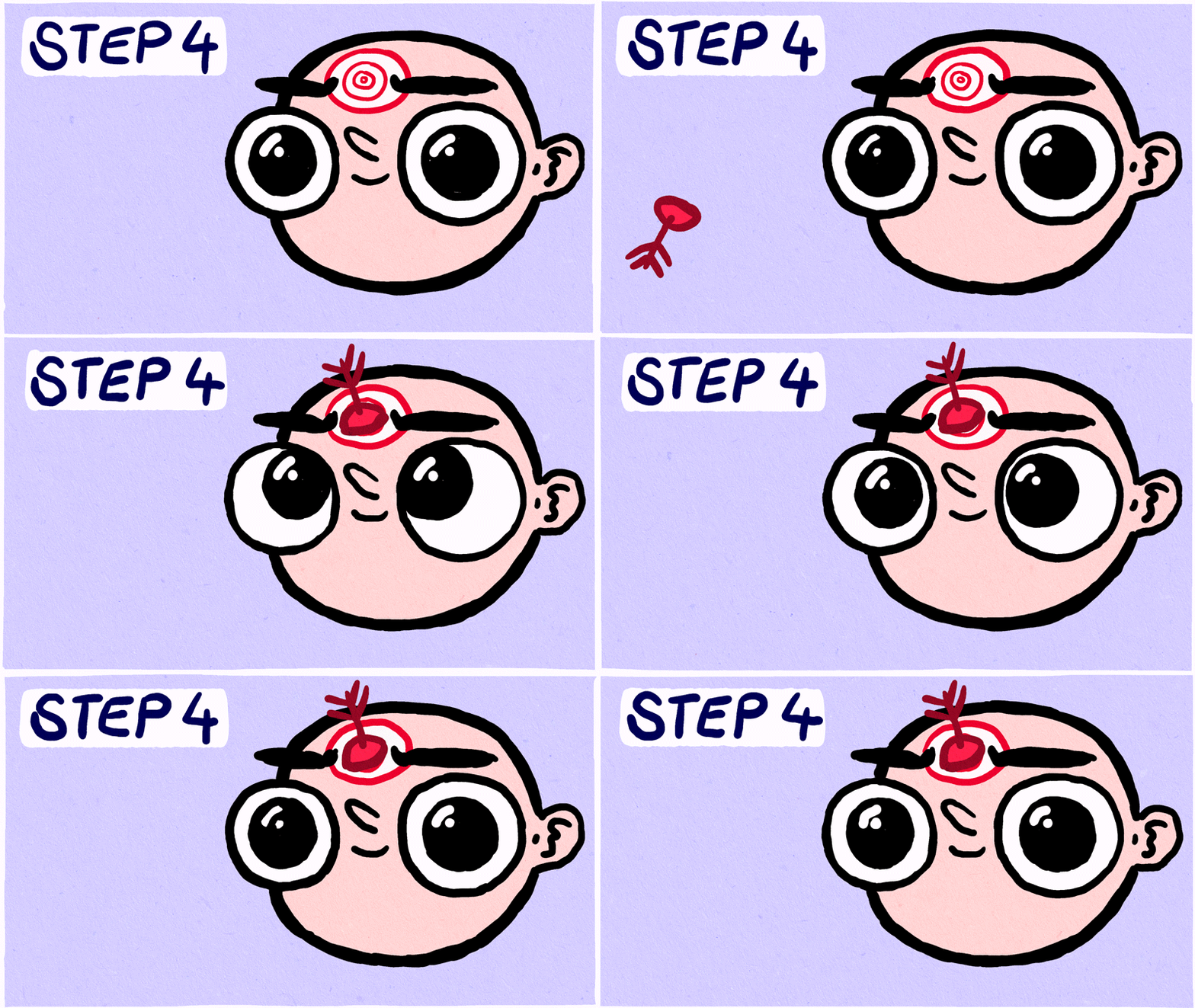
➡ Step 4: Set a goal and see the benefits.
Having clear goals and a detailed plan of how you want to change will help. Write them down and put them where you can see them. Write down your “why!” Why do you want to change? What would be better if you changed? Visualize how you will succeed and the benefits you will reap. Imagine this, just as you did with the negative things in step two. How will you feel if you succeed? What will it look like? Do this regularly, and it will motivate you to change for the better.
If you don’t write your goals down, you’ll either forget them or fail to take them seriously. So, don’t skip this step! It’s one of the easiest things you can do, and it won’t take much time, although it will have a big impact.
➡ Step 5: Build a habit!
This is the heart of the entire process. It’s the most important step! If you don’t do this every day, nothing will happen. Building habits is a great way to change yourself. Yes, the process is long, and it will take time, but you’re getting older anyway. Why not change while you’re at it?
To build a habit, follow the method Charles Duhigg describes in his book “The Power of Habit“. A habit consists of three things: Cue ➡ Routine ➡ Reward. We break these down in our case study of perfectionism.
Cue
The cue is when your perfectionism kicks in and stops you from being productive. If it’s adaptive perfectionism, you don’t have to do anything. Remember, this is the good kind! Just let it be. However, if you can’t work at all, then it’s the unhealthy kind of perfectionism. We’ll use that as a cue for our new habit. Try to identify those cues when your bad perfectionism strikes.
Routine
Your routine was usually different. You either gave up or became emotional about your creative work. Now, we apply what we learned in the previous steps. Why did you experience maladaptive perfectionism? Why isn’t it the adaptive kind? Can I change this? Did I make a mistake? Can I learn from it? Tell yourself that how you feel right now is okay. Tell yourself that what you are doing is good. It doesn’t have to be perfect! Small mistakes are okay for achieving good results! This is where the growth mindset we discussed in Step 3 comes in!
Reward
The reward is that you will feel better. You will be able to finish your work, even when you feel like you can’t. You may reward yourself by acknowledging that you have overcome your maladaptive perfectionism and replaced it with adaptive perfectionism. You can experiment with other rewards, such as taking a break or enjoying a nice cup of coffee or tea. See what works best for you.
Something more: Craving
There is also a craving that drives the habit. You will crave the rewards and perform the habit automatically. So, if you reward yourself with positive feelings, then you will use that habit without hesitation when maladaptive perfectionism strikes!
Conclusion
If you follow these steps, you may find a way out of the deep hole of maladaptive perfectionism. But remember, it will take a long time to fix. If you’re afraid it will take too long, keep in mind that it will always take time. There is no way around it. No shortcuts. That’s why it’s important to start now!
Sources
Wigert, B., Reiter-Palmon, R., Kaufman, J. C., & Silvia, P. J. (2012). Perfectionism: The good, the bad, and the creative. Journal of Research in Personality, 46(6), 775–779. https://doi.org/10.1016/j.jrp.2012.08.007
Yeager, D. S., & Dweck, C. S. (2012). Mindsets That Promote Resilience: When Students Believe That Personal Characteristics Can Be Developed. Educational Psychologist, 47(4), 302–314. https://doi.org/10.1080/00461520.2012.722805
Duhigg, C. (2012). The Power of Habit: Why We Do What We Do in Life and Business (1 edition). Random House.